Reclaimed Wood Products Through Partner Suppliers in Minneapolis-St. Paul
Boards, beams, flooring, and siding salvaged from older buildings, available through partner suppliers in our network. Tell us what you need and we pass your request along for a quote. Serving Minneapolis-St. Paul and the Twin Cities metro.
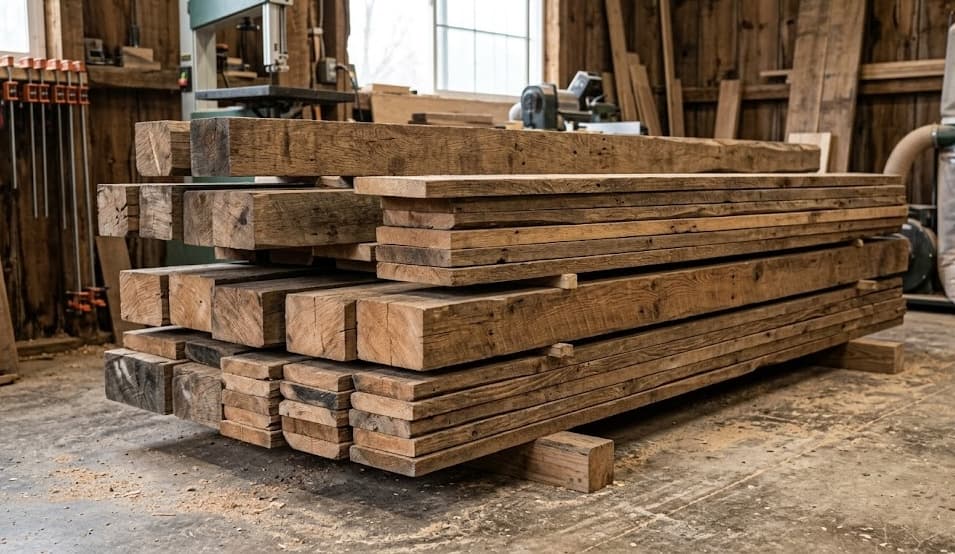
Every Piece Tells a Story
Available through partner suppliers in our network
Find the Right Reclaimed Material
From structural framing to decorative accents, these categories cover most phases of residential and commercial construction. Availability depends on partner suppliers.
Reclaimed Lumber
Dimensional boards and planks salvaged from older buildings. Oak, pine, Douglas fir, cedar, and less common species in standard framing sizes, through partner suppliers.
Beams & Timbers
Hand-hewn and sawn beams reclaimed from barns, warehouses, and industrial buildings. Strong visual character for decorative use, or structural use with engineering review.
Reclaimed Flooring
Tongue-and-groove hardwood flooring milled from antique timber. Heart pine, white oak, maple, and walnut with a patina that new boards do not have.
Siding & Paneling
Weathered barn wood, shiplap, and tongue-and-groove paneling for exterior siding and interior accent walls. Authentic texture and color that only time creates.
Hardware & Accessories
Vintage hardware, hand-forged nails, reclaimed brackets, and wood finishing products. The smaller items that round out a reclaimed wood project.
Select New Lumber
When a project calls for new wood, ask partner suppliers what is available, including lumber from certified forests. Useful alongside reclaimed material for hidden framing.
Understanding Reclaimed Wood Grades
Reclaimed wood is usually sorted into tiers by visual appearance and character level. Grade names are not standardized, so each supplier may use its own. Ask how a supplier grades, whether material has been de-nailed, and whether it suits structural use.
Select
Minimal character marks, tight grain with no open knots or wane. Both faces are clean and suitable for fine furniture and visible surfaces. Boards are straight and flat.
Fine furniture, visible cabinetry, interior trim, feature shelving
Character
Moderate nail holes, minor checking, and visible patina, with tight knots permitted. Balances reclaimed character with a clean, usable surface.
Accent walls, flooring, general construction, rustic furniture, most residential projects
Rustic
Heavy character including open knots, wane edges, worm holes, and deep checking. The strongest barn look, generally for non-load-bearing use.
Statement pieces, barn-style walls, garden structures, art installations, decorative paneling
Utility
Boards intended for hidden applications. They may have cosmetic defects, so check each piece for soundness before use.
Blocking, hidden supports, concrete formwork, shop fixtures
Pricing is by quote from partner suppliers and depends on species, grade, dimensions, and quantity. Request a quote for your specific requirements.
How to Choose the Right Product
Not sure where to start? Follow this guide based on your project type to find the right reclaimed material.
Building or Remodeling a Home
Start with Reclaimed Lumber for framing, add Reclaimed Flooring for living spaces, and consider Reclaimed Beams for exposed ceiling details. Use New Lumber only where code requires graded, stamped stock.
Start with LumberRestaurant or Retail Interior
Reclaimed Siding (shiplap or barn board) creates the biggest visual impact for commercial interiors. Pair with a feature Beam as a focal point and Vintage Hardware for authentic detail.
Start with SidingSingle Feature Wall or Accent
Reclaimed Siding in your preferred profile is the most efficient option. For a fireplace surround, add a Mantel Beam. See the Hardware section for mounting fasteners.
Start with SidingFlooring Replacement or New Install
Go directly to Reclaimed Flooring. Choose your species, width, and finish level. Order 10% extra for cutting waste and future repairs. Add Finishing Products from Hardware.
Start with FlooringOutdoor Structure (Deck, Pergola, Fence)
Use Reclaimed Lumber in rot-resistant species (cedar, white oak) for structural elements. For exterior siding, choose weather-rated profiles. Always seal with an exterior wood sealer.
Start with LumberFurniture or Craft Project
Reclaimed Lumber in 1x or 2x dimensions is ideal for tabletops, shelving, and furniture builds. Add Vintage Hardware for drawer pulls and hinges. Hardwax oil makes a durable, repairable tabletop finish.
Start with LumberSpecies and Typical Uses
Common species in the reclaimed and new lumber trade and where each is usually used. What can be sourced changes with salvage supply, so ask partner suppliers what is available.
| Species | Typical Uses |
|---|---|
| White Oak | Boards, beams, flooring, siding |
| Heart Pine | Flooring, boards, beams |
| Douglas Fir | Boards, beams, siding, new framing lumber |
| Eastern White Pine | Boards, beams, siding, new trim stock |
| Western Red Cedar | Siding, outdoor boards, new decking |
| Hemlock | Boards, beams, siding |
| American Elm | Boards and furniture stock |
| Black Walnut | Boards, flooring, furniture stock |
| Hard Maple | Flooring, boards, new finish lumber |
| Hickory | Flooring and boards |
| Red Oak | Boards, flooring, siding, new finish lumber |
| American Chestnut | Rare; furniture, paneling, and restoration work |
Product Comparison
Compare the product categories side by side to find the right fit for your project.
| Product | Best For |
|---|---|
| Reclaimed Lumber | Framing, furniture, shelving, general construction |
| Beams & Timbers | Exposed ceilings, mantels, structural posts, headers |
| Reclaimed Flooring | Living spaces, dining rooms, commercial interiors |
| Siding & Paneling | Accent walls, exterior cladding, ceilings, wainscoting |
| Hardware & Accessories | Finishing, fastening, restoring, decorating |
| Select New Lumber | Code-required framing, uniform trim, tight timelines |
Pricing is by quote from partner suppliers, based on your species, dimensions, and quantity.
Project Planning Guide
Estimate how much material your project requires. Follow these steps and formulas to calculate board feet, square footage, and the right waste factor for your installation type.
Measure Your Space
Measure the length and width of the area in feet. For walls, measure height and width. For irregularly shaped rooms, break the area into rectangles and add them together. Subtract openings (windows, doors) from wall calculations.
Determine Coverage Area
Multiply length by width to get square footage. For flooring, this is your base coverage number. For walls, multiply height by width for each wall and add together.
Add Waste Factor
Add 10% for straight horizontal or vertical installations. Add 15% for walls with many cuts around outlets and windows. Add 20% for diagonal, herringbone, or chevron patterns. Always keep spare material for future repairs.
Convert to Board Feet
For dimensional lumber, one board foot equals a piece 1 inch thick, 12 inches wide, and 12 inches long. Formula: (Thickness in inches x Width in inches x Length in feet) / 12 = Board Feet per piece. Multiply by the number of pieces needed.
Flooring Calculation Example
Room: 14 ft x 20 ft = 280 sq ft. Add 10% waste = 280 x 1.10 = 308 sq ft of flooring needed. Flooring is usually quoted by the square foot, so give suppliers that figure.
Accent Wall Calculation Example
Wall: 8 ft tall x 14 ft wide = 112 sq ft. Subtract one 3x5 ft window = 112 - 15 = 97 sq ft. Add 15% waste for cuts around window = 97 x 1.15 = 112 sq ft of siding needed.
Beam Calculation Example
Ceiling span: 16 linear feet. Beam size: 8x10. Board feet per linear foot = (8 x 10) / 12 = 6.67 BF/ft. Total: 16 x 6.67 = 107 board feet. Rough weight for Douglas fir: 16 ft x 17.5 lbs/ft = 280 lbs.
Not Sure? Include Your Dimensions.
Send your room dimensions, project type, and preferred species with your quote request. We pass your request to partner suppliers, and a supplier follows up with quantities and availability.
Send Dimensions for a QuoteWhat Old-Growth Timber Offers That Modern Lumber Often Does Not
Much of the lumber in older buildings came from old-growth forests, where trees grew slowly under dense canopy. Slow growth tends to produce tighter growth rings and denser wood than fast-grown plantation softwoods.
Reclaimed wood has also already been in service, often for a very long time, so much of its early drying and movement is behind it. That said, moisture content depends on how it has been stored, so check it before use.
Tighter Grain
Old-growth softwoods generally show many more growth rings per inch than plantation-grown lumber. Individual boards vary, so structural use still calls for a qualified assessment.
Long Seasoned
Wood that has spent generations inside a building has had plenty of time to dry slowly. It often machines cleanly, though old fasteners and surface grime call for care.
Species That Are Hard to Find New
Old-growth heart pine and American chestnut are very hard to buy as new lumber, so reclaimed material is the usual source when they turn up at all.
Materials Kept in Use
Reusing a beam or board avoids cutting and milling a new one, and wood stores carbon while it stays in use.
Planning a Larger Order
Whether you are a contractor pricing a framing package, a designer sourcing for several projects, or a homeowner doing a whole-house renovation, a clear request helps partner suppliers respond with a useful quote. Any volume pricing is up to the supplier.
What to Include in Your Request
List species, grade, dimensions, and quantity for each item, along with your project location and timeline. Note anything flexible, such as species alternatives, because reclaimed supply is limited by what has been salvaged.
Request a QuoteQuestions to Ask a Supplier
Ask how material is graded, whether it has been de-nailed, how it is bundled and protected for transport, whether delivery or pickup is available, and what a packing list will show. Partner suppliers set their own terms, so confirm them before you order.
Product Combinations to Consider
A few ways these materials work together. Asking for complementary products in one request makes it easier to match species.
The Full Farmhouse
A natural fit for building or remodeling in the modern farmhouse style. Matching species across floors, walls, and beams creates a cohesive warmth throughout the space.
The Urban Loft
Well suited to downtown Minneapolis condos, coworking spaces, and coffee shops. Shiplap walls, exposed beams, and industrial hardware combine for an urban look.
The Historic Restoration
For restoring older homes in Minneapolis neighborhoods like Kenwood or Lowry Hill, or along Summit Avenue in St. Paul. If your home is in a historic district, check material requirements with your local preservation office.
The Green Build
For projects that want to use as much reclaimed material as practical, with new lumber where code calls for graded, stamped stock.
Product Care Quick Reference
Proper storage and maintenance extends the life and beauty of every reclaimed wood product. Here is a quick reference for each product type.
| Product Type | Care Instructions |
|---|---|
| Dimensional Lumber | Store flat on stickers between layers, keep dry, acclimate 3-5 days indoors before use |
| Flooring | Acclimate at least 5-7 days in installation space, maintain 30-50% RH, test MC before install |
| Beams & Timbers | Minimal care needed, periodic dusting, apply oil or wax every 2-3 years if desired |
| Siding (Exterior) | Apply UV-inhibiting penetrating sealer, recoat every 3-5 years, rinse with hose twice yearly |
| Siding (Interior) | Dust monthly, occasional oil or wax treatment every 3-5 years, spot-clean as needed |
| Hardware (Iron) | Wipe with dry cloth, apply paste wax to prevent oxidation, avoid prolonged moisture contact |
For detailed care guides specific to your species, finish, and application, see the care section on each product page or see the Hardware & Accessories page for maintenance products to ask about.
Why Reuse Matters
Keeping sound wood in service has practical benefits that do not depend on any one project or supplier.
Less New Harvesting
Reusing a board or beam avoids cutting and milling a new one for that part of the project.
Less Material Discarded
Wood recovered from demolition and renovation work gets another use instead of being thrown away.
Carbon Stays Stored
Wood stores carbon while it stays in use, so a longer service life keeps that carbon in the material for longer.
Ask About Samples
Choosing reclaimed wood is a tactile decision. The grain, the color, the weight in your hand: these details matter. If a sample would help, ask partner suppliers what is available.
Tell Us What You Need
Use the quote form to list species, product type, and any finish preferences. Be as specific as possible.
We Pass Your Request Along
We pass your request to partner suppliers in our network.
A Supplier Follows Up
A partner supplier follows up on whether samples are available and how they can be provided.
What to Look For in a Sample
How Reclaimed Wood Reaches a Project
The usual path for salvaged wood in the trade. Steps vary by supplier, so ask partner suppliers how their material is handled.
Salvage
Lumber is recovered from buildings being taken down or renovated, ideally by careful deconstruction that limits damage.
De-Nail & Clean
Suppliers commonly remove nails with hand tools, check for metal, and clean off dirt and debris. Old paint needs extra care.
Grade & Sort
Lumber is typically sorted by species, dimension, and condition so buyers can compare like with like.
Mill & Supply
Many pieces are sold as found, and others go to a mill for surfacing or profiling. Pickup and delivery are available through partner suppliers.
Product FAQ
Common questions about requests, delivery, and product selection.
Does Lumber Minneapolis sell these products directly?
No. Lumber Minneapolis is a referral service. Products are available through partner suppliers in our network, and we pass your request to them. They set prices and handle the sale.
What areas do you cover?
We take requests from the Twin Cities metro and nearby Minnesota. Availability depends on partner suppliers, and delivery is arranged through them.
Can I hand-pick my lumber in person?
Lumber Minneapolis has no yard of its own. Some suppliers may welcome buyers who want to choose beams, mantels, or feature boards in person, so mention it in your quote request and ask partner suppliers what is possible.
How do I know what species I have if I am matching existing reclaimed wood?
Note the grain pattern, color, density, and end grain, and take clear photos. Mention the wood you are matching in your quote request. A partner supplier may be able to advise once they see photos or a sample.
How does pricing work?
Pricing is by quote from partner suppliers. It depends on species, grade, dimensions, quantity, and current availability. A quote request is free and carries no obligation.
What about returns and paperwork for green building projects?
Return terms and any documentation are up to the partner supplier handling your order. If you need material records for a green building program, ask before you order.
Can I ask for a mix of reclaimed and new lumber?
Yes. Many projects combine reclaimed wood for visible surfaces with new lumber for hidden framing. List both in your request and a partner supplier will follow up on what they can provide.
Not Sure Which Product Fits Your Project?
Tell us about your build and we pass your request to partner suppliers in our network. A partner supplier follows up with options on wood, species, and grade. Quote requests are free and carry no obligation.