Salvaged Wood. Second Life. Zero Waste.
We rescue lumber from demolition sites, old barns, and warehouses across Minnesota — then transform it into premium building materials that are better for your project and the planet.
Every Piece of Lumber We Save Is a Tree That Gets to Keep Growing
The construction industry generates over 600 million tons of waste annually in the United States alone. At Lumber Minneapolis, we believe that used lumber isn't waste — it's a resource. Our reclaimed wood carries decades of strength, character, and tight grain patterns that new-growth timber simply cannot match.
By choosing reclaimed lumber, you're not just getting superior materials — you're actively fighting climate change. Every board foot of reclaimed wood prevents approximately 3.6 kg of CO₂ from entering the atmosphere compared to harvesting new timber.
The lumber inside a single century-old barn can contain 15,000 to 40,000 board feet of old-growth timber — wood that took 200 to 400 years to grow in now-vanished first-growth forests. When that barn is demolished conventionally, all of that material goes to the landfill, where it decomposes and releases stored carbon as CO₂ and methane. We intercept that material, process it, and give it another lifetime of productive use. The carbon stays locked in the wood. The forests stay standing. And your project gets material with density and character that no modern mill can produce.
of our inventory is reclaimed from local Minnesota sources
cut for every board foot of reclaimed lumber we sell
average age of our old-growth reclaimed timber
of CO₂ emissions prevented annually through our reclamation work
equivalent trees left standing every year because of our customers
landfill diversion rate from our processing operations
Old-Growth vs. New-Growth: Why It Matters
The difference between reclaimed old-growth lumber and modern plantation timber is not subtle. It is measurable, visible, and significant across every performance metric that matters to builders and designers.
Grain Density & Structure
Old-growth reclaimed timber typically shows 12 to 30 growth rings per inch, compared to just 4 to 8 rings per inch in modern plantation-grown lumber. This tight grain develops because old-growth trees matured slowly in dense forest canopy over 200 to 400 years, producing wood with significantly greater cellular density. The result is a material that is harder, more dimensionally stable, and more resistant to wear. Under a hand lens, the difference is immediately visible: reclaimed end-grain looks like fine parallel lines, while new-growth end-grain shows wide, open spacing between rings.
Janka Hardness Advantage
Because of their dense grain structure, old-growth reclaimed species consistently test 25 to 40 percent harder on the Janka scale than their new-growth equivalents. Old-growth longleaf pine (heart pine) tests at approximately 1,225 lbf, compared to just 690 lbf for new-growth southern yellow pine. Reclaimed white oak from century-old structures often exceeds 1,400 lbf. This hardness translates directly to better performance in high-traffic flooring, more durable work surfaces, and superior nail-holding capacity in structural applications.
Dimensional Stability
Reclaimed lumber has been seasoning in place for decades — sometimes more than a century. During that time, the wood has reached a deep equilibrium moisture content, with internal stresses fully resolved. New kiln-dried lumber, by contrast, is force-dried in 7 to 14 days, which can leave internal case-hardening and residual stress that manifests as warping, cupping, or twisting after installation. Reclaimed wood that has been stable for 80 years in a building is not going to move when you install it in your home. That stability is earned through time, not forced through heat.
Chemical-Free Material
Pre-1950 construction lumber was not treated with chemical preservatives. There was no CCA (chromated copper arsenate), no ACQ (alkaline copper quaternary), and no borate treatments. The wood was naturally durable because old-growth species produced dense heartwood saturated with natural resins, tannins, and oils that resisted rot and insects without chemical intervention. When you choose reclaimed lumber, you are getting material that achieved its durability through biology, not chemistry — making it a safer choice for interior applications, food-contact surfaces, and homes with children.
Carbon Sequestration
Wood is approximately 50 percent carbon by dry weight. A single board foot of reclaimed lumber contains roughly 1.5 pounds of carbon that was originally captured from the atmosphere by a living tree. When that wood goes to a landfill, decomposition releases that carbon as CO2 and methane over time. When we reclaim that wood and install it in a new building, the carbon stays locked in the material for another generation. Additionally, using reclaimed lumber displaces the need to harvest a new tree, allowing the standing tree to continue absorbing CO2 from the atmosphere. The net carbon benefit is compounded.
Aesthetic Depth & Patina
The visual character of reclaimed wood is impossible to replicate through artificial distressing or staining. The patina that develops over decades of exposure — the subtle color shifts, the oxidation patterns, the worn edges, the ghost marks from original hardware — creates a depth and authenticity that clients and designers recognize instantly. Hand-hewn adze marks from 19th-century carpenters, original mill saw patterns, pencil notations from long-gone builders, and the warm amber tones that develop in heart pine over a century of aging — these qualities are a one-way trip. They cannot be manufactured, only recovered.
Four Steps from Inquiry to Installation
Working with reclaimed lumber should be as straightforward as buying new. We have built a process that makes it easy — from your first call to the moment material arrives on your job site.
Contact & Consult
Reach out by phone, email, or our online form. Tell us about your project — dimensions, species preferences, timeline, and budget. We will match you with the right material from our inventory or advise on upcoming lots.
Quote & Select
We provide a detailed quote with pricing per board foot, milling costs if applicable, and delivery fees. You can visit our Roseville yard to hand-pick boards, or we will select material that matches your specifications.
Process & Prepare
Once your order is confirmed, our team preps the material: de-nailing, planing, resawing, profiling, or custom fabrication — whatever your project requires. Every board passes a final quality inspection before packaging.
Deliver & Build
We load your order on our flatbed trucks and deliver it to your job site across the Twin Cities metro. Large orders can be staged to match your construction schedule. Will-call pickup is also available at our yard.
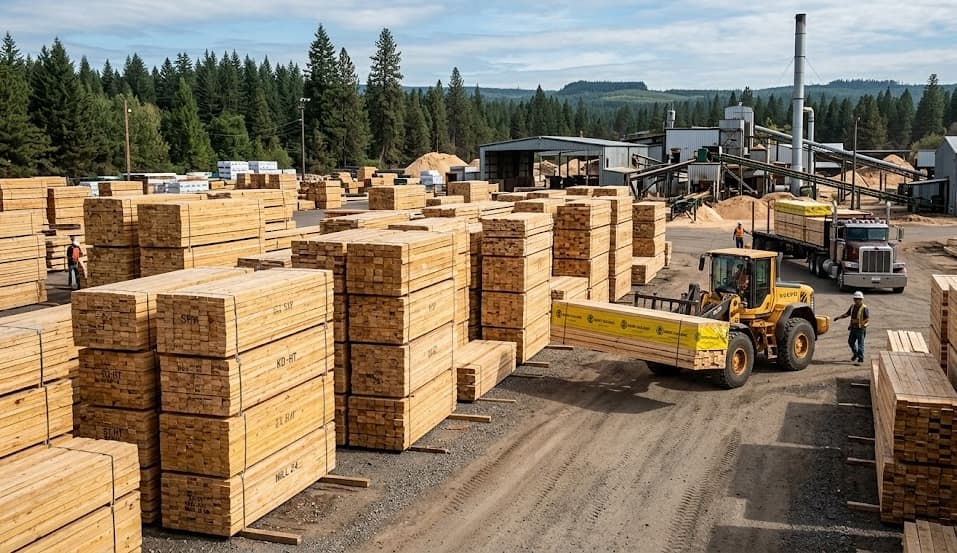
Premium Reclaimed Wood — Ready for Your Next Project
Hand-selected, de-nailed, and graded at our Minneapolis yard
Full-Cycle Lumber Services
From salvage to delivery, we handle every step of the reclaimed lumber journey. Whether you're buying, selling, or need custom work — we've got you covered.
Buy Reclaimed Lumber
Premium salvaged wood from historic Minneapolis structures — oak, pine, fir, and rare species with character you can't find in new lumber.
Learn moreSell Your Lumber
Got used lumber from a renovation or demolition? We'll pay fair prices for quality reclaimed wood. Every board deserves a second life.
Learn moreCustom Milling
We transform rough reclaimed timber into precision-milled boards, beams, flooring, and siding. Your vision, our craftsmanship.
Learn moreDelivery & Transport
Flatbed delivery across the Twin Cities metro and beyond. We handle the heavy lifting so your project stays on schedule.
Learn moreDeconstruction
Professional building deconstruction that salvages every usable board. We dismantle structures with care to maximize material recovery.
Learn moreCustom Fabrication
From barn doors to mantels, tables to accent walls — we build custom pieces from reclaimed wood that tell a story.
Learn moreEvery Board Tells a Story of Sustainability
Since our founding, we've been tracking the environmental impact of every piece of reclaimed lumber we rescue, process, and deliver.
Our Commitment to Quality: 8-Point Inspection
Every board that leaves our yard has passed through an eight-point quality pipeline. This is not a quick visual scan — it is a systematic evaluation that ensures structural soundness, dimensional accuracy, and verified species identification.
Metal Detection Scan
Every board is scanned on both faces and both edges with a calibrated electromagnetic metal detector. Buried nails, screws, lag bolts, and staples are located and marked before any processing begins. This prevents catastrophic blade damage during milling and ensures customer safety during installation.
Moisture Content Verification
We check moisture content at multiple points on every board using both pin-type and pinless moisture meters. Interior-use material must read between 6% and 12% MC. Material reading above threshold is air-dried in our covered staging area until it reaches equilibrium. We never rush this step — dimensionally unstable lumber causes callbacks.
Structural Integrity Check
Each board is evaluated for rot, insect damage, compression failure, and internal voids. We use visual inspection, tap-testing (hollow sound indicates internal decay), and flex testing for longer boards. Material with compromised structural integrity is diverted to non-structural uses or our secondary-use stream.
Species Identification
Our grading team identifies species through end-grain analysis under magnification, weight-per-volume comparison, color and grain pattern assessment, and — for aromatic species — scent analysis of a fresh-cut surface. Correct species identification is essential for accurate grading, appropriate pricing, and proper milling parameters.
Dimensional Accuracy
After milling, every board is measured with digital calipers at multiple points along its length. Our target tolerance is within 1/32 inch of specified dimensions. Boards with excessive variation, snipe, or taper are re-milled or downgraded. Consistent dimensions mean clean installation without on-site reworking.
Surface Defect Assessment
We evaluate every board for surface defects: checking depth and severity, stain penetration, tear-out from milling, and any contamination (paint, adhesive, chemical treatment). Premium Select grade material has minimal defects; lower grades allow more character while remaining structurally sound. Every defect is noted and factored into the grade assignment.
Grade Assignment
Based on all preceding assessments, each board receives a grade: Premium Select, #1 Common, #2 Common, Structural, or Rustic/Barnwood. Our grading adapts NHLA hardwood standards for the realities of reclaimed material. We err on the side of conservative grading — a board sold as #1 Common will always meet or exceed that standard.
Documentation & Tagging
Every graded board receives a physical tag showing species, grade, dimensions, moisture content reading, and source lot number. This tag follows the board through storage, milling, and delivery. If a customer has a question about any piece, we can trace it back to the specific structure it was recovered from.
Trusted by Builders, Designers, and Homeowners Across the Twin Cities
Our customers range from general contractors running large renovation projects to homeowners building their first accent wall. No matter the scale, every customer gets the same quality material and attention to detail.
General Contractors
We supply framing lumber, structural beams, and finish materials for renovation and new-construction projects. Our contractors appreciate reliable inventory, consistent grading, and on-time flatbed delivery that keeps job sites moving. We can match materials to existing historic structures for seamless renovation work.
Common projects: Residential renovations, commercial build-outs, mixed-use developments
Architects & Designers
Reclaimed wood brings warmth, texture, and narrative to design projects that manufactured materials cannot replicate. We work with architects to source specific species, grain patterns, and character profiles for feature walls, ceilings, millwork, and structural accents. We provide material samples and spec sheets for project documentation.
Common projects: Restaurant interiors, office lobbies, retail spaces, residential custom homes
Homeowners & DIYers
Whether you are building a backyard deck, installing a reclaimed-wood accent wall, or crafting a farmhouse table for your dining room, our team can help you choose the right material and milling profile. No project is too small, and we are happy to educate first-time buyers on species selection and working with reclaimed wood.
Common projects: Accent walls, furniture, decking, shelving, mantels, picture frames
Interior Designers
We collaborate with designers to curate materials that match specific aesthetic visions — from clean, skip-planed white oak for modern interiors to rough-sawn barnwood for rustic farmhouse spaces. We offer sample bundles so you can present material options to clients before committing to an order.
Common projects: Hospitality design, residential staging, commercial interiors, model homes
Property Developers
For developers building mixed-use, multifamily, or commercial properties, reclaimed lumber provides a distinctive design element that differentiates projects in competitive markets. We handle volume orders and coordinate delivery schedules across multi-phase construction timelines. Reclaimed materials can also support green building certification credits.
Common projects: Apartment lobbies, condo common areas, retail storefronts, hotel features
Restaurant & Brewery Owners
Reclaimed wood sets the atmosphere in restaurants, breweries, taprooms, and cafes across the Twin Cities. We supply bar tops, tabletops, wall paneling, ceiling treatments, and custom host stands — all built from salvaged timber with genuine patina and story. Several of Minneapolis's most recognized dining rooms feature our material.
Common projects: Bar tops, communal tables, wall cladding, ceiling beams, signage
Our Material Promise
Reclaimed lumber has a reputation problem. Too many sellers move rough, un-inspected salvage with hidden nails, rot, and inconsistent dimensions. We built our entire business on solving that problem. When you buy from Lumber Minneapolis, you get material that has been thoroughly vetted and professionally processed.
Every board in our inventory has passed through a multi-stage quality pipeline. We inspect for structural integrity, scan for hidden metal with electromagnetic detectors, check moisture content with pin and pinless meters, and grade every piece according to standards adapted from the National Hardwood Lumber Association. The result is reclaimed wood you can trust — clean, dimensionally accurate, and ready to work.
100% De-Nailed
Every fastener is removed by hand. We use electromagnetic scanning on all faces and edges to catch buried metal that visual inspection misses. Your planer blades are safe.
Moisture Verified
We check moisture content on every board and target 6-12% for interior applications. Lumber that reads above our threshold is air-dried or set aside until it reaches equilibrium.
Graded & Tagged
Every piece is graded — Premium Select, #1 Common, #2 Common, Structural, or Rustic — and tagged with species, dimensions, and source lot. You know exactly what you are buying.
Satisfaction Backed
If any board does not meet the grade it was sold as, we replace it. We stand behind every piece that leaves our yard because our reputation depends on the quality of the material in your hands.
Reclaimed Wood for Every Project
Every piece in our inventory has been carefully inspected, de-nailed, and graded. What arrives at your site is clean, dimensionally stable, and ready to work.
Reclaimed Lumber
Dimensional boards, planks, and framing lumber salvaged from historic buildings. Available in oak, pine, fir, maple, and more — graded and ready for your project.
View detailsBeams & Timbers
Massive structural beams with decades of character and unmatched strength. Hand-hewn and mill-cut options from 4x4 to 12x12 and larger.
View detailsFlooring
Tongue-and-groove hardwood flooring with patina no factory can replicate. Heart pine, white oak, and mixed hardwood options in multiple widths.
View detailsSiding & Paneling
Weathered boards perfect for accent walls, exterior cladding, and feature panels. Shiplap, V-groove, and board-and-batten profiles available.
View detailsHardware & Accessories
Vintage hardware, reclaimed nails, brackets, and finishing supplies. Authentic period pieces recovered from our deconstruction projects.
View detailsSelect New Lumber
When new lumber fits the project better, we source sustainably managed options from FSC-certified and local Minnesota mills.
View detailsSeasonal Availability Guide
Reclaimed lumber inventory fluctuates with the seasons. Understanding these cycles helps you plan projects around peak availability for the species and dimensions you need.
Spring (Mar-May)
Barn Wood & Rural Salvage
Farmers grant access to outbuildings after ground thaws. Barn dismantles are most active in spring when fields are accessible but planting has not yet begun. Expect large lots of mixed softwoods and hardwoods from century-old agricultural structures.
Common species: White pine, heart pine, white oak, Douglas fir
Typical volume: 80,000-120,000 BF typical
Summer (Jun-Aug)
Commercial Demolition Lumber
Construction and demolition activity peaks in summer. Commercial building teardowns, warehouse renovations, and industrial site redevelopments generate the highest volume of urban reclaimed lumber. Expect larger dimension stock including heavy timbers and beams.
Common species: Douglas fir, white oak, red oak, maple, elm
Typical volume: 150,000-200,000 BF typical
Fall (Sep-Nov)
Residential Renovation Surplus
Homeowners and contractors finishing renovation projects before winter sell surplus framing lumber, removed flooring, and salvaged trim. Smaller lots but often high-grade hardwoods from pre-war residential construction. Good source for finish-grade material.
Common species: White oak, red oak, heart pine, maple, walnut
Typical volume: 60,000-90,000 BF typical
Winter (Dec-Feb)
Indoor Warehouse & Factory Salvage
Indoor demolition projects continue year-round regardless of weather. Winter is prime time for warehouse and factory interior teardowns. Material tends to be well-preserved with lower moisture content due to decades of indoor climate. Excellent for gymnasium maple flooring and factory-floor hardwoods.
Common species: Douglas fir, heart pine, maple, hickory
Typical volume: 50,000-80,000 BF typical
Reclaimed vs. New Lumber — Side by Side
Reclaimed lumber is not just an environmental choice. On multiple performance metrics, old-growth salvaged wood outperforms modern plantation timber. Here is the data.
| Metric | Reclaimed Lumber | New Lumber | Advantage |
|---|---|---|---|
| Grain Density | 12-20 growth rings per inch (old-growth) | 3-6 growth rings per inch (plantation) | Reclaimed wood is 2-4x denser |
| Dimensional Stability | Naturally seasoned 50-150 years | Kiln-dried 7-14 days | Decades of stable equilibrium |
| Carbon Footprint | ~0.5 lbs CO2 per board foot | ~3.6 lbs CO2 per board foot | 86% lower emissions |
| Janka Hardness | Old-growth pine: 1,225 lbf | New-growth pine: 690 lbf | Up to 2x harder |
| Chemical Treatment | None — naturally seasoned | Often pressure-treated with preservatives | Zero chemical exposure |
| Aesthetic Character | Authentic patina, nail holes, saw marks | Uniform, machine-finished | Irreplaceable authenticity |
| Environmental Impact | Diverts waste from landfills | Requires tree harvesting | Net positive for the planet |
| Cost per Lifetime | Higher upfront, lasts generations | Lower upfront, may need replacement | Better long-term value |
Industry Standards We Meet
Professional reclaimed lumber processing requires adherence to the same industry standards that govern new lumber operations — plus additional protocols specific to salvaged material. Here are the standards we meet.
FSC Chain of Custody Familiar
Our team is trained in Forest Stewardship Council chain of custody principles. While reclaimed lumber by definition does not carry FSC certification (it was harvested before modern certification existed), we apply the same documentation rigor — tracking every lot from source structure to customer delivery with full provenance records.
NHLA Grading Certified
We grade our reclaimed hardwoods according to standards adapted from the National Hardwood Lumber Association. Our grading team has completed NHLA training and applies those principles with modifications appropriate for reclaimed material — accounting for character marks, nail holes, and patina that add value rather than reduce it.
OSHA Compliant Facility
Our Roseville yard operates in full compliance with Occupational Safety and Health Administration standards. This includes proper machine guarding on all milling equipment, hearing protection and dust mask requirements, forklift operator certification, fall protection protocols, and regular safety training for all team members.
EPA Dust Collection Standards
Our milling shop meets EPA requirements for wood dust collection and air quality. Our central dust collection system captures particulate at every machine station with cyclone separation and bag filtration. We monitor air quality in the shop and maintain filtration systems on a regular schedule to ensure worker safety and environmental compliance.
MPCA Compliant Operations
We operate in compliance with Minnesota Pollution Control Agency regulations for waste management, stormwater runoff, and air emissions. Our waste diversion program exceeds MPCA targets, and we participate in MPCA reporting programs that track construction waste diversion across the state.
DOT-Licensed Transport Fleet
Our flatbed delivery trucks are operated under Department of Transportation licensing with properly maintained vehicles, certified drivers, and compliant load-securing practices. All loads are strapped at regulation intervals with corner protectors on finished surfaces, and our drivers carry the required commercial documentation for every delivery.
Recent Projects We've Supplied
From brewery taprooms to lakehouse renovations, our reclaimed lumber shows up in projects across the Twin Cities and beyond. Here are some recent highlights.
Northeast Minneapolis Brewery Taproom
Material: Reclaimed white oak and heart pine
Scope: 1,800 sq ft of wall paneling, custom bar top, and 6 communal tables
Sourced from a 1920s grain warehouse in Saint Paul. The oak was skip-planed to preserve the original patina while providing a smooth surface for the bar top.
Lake Minnetonka Lakehouse Renovation
Material: Old-growth Douglas fir beams and reclaimed pine flooring
Scope: 3,200 sq ft of tongue-and-groove flooring plus 8 structural beams
The fir beams came from a bridge replacement project in western Wisconsin. Each beam was cleaned, squared on two faces, and left rough on the exposed sides for character.
Uptown Minneapolis Boutique Hotel Lobby
Material: Mixed reclaimed hardwoods — oak, maple, walnut
Scope: 900 sq ft accent wall, reception desk, and ceiling treatment
Designed in collaboration with the hotel's architect. We provided seven material samples before the final species mix was approved, then milled everything to a consistent 3/4-inch thickness.
Stillwater Historic Home Restoration
Material: Reclaimed heart pine and white oak
Scope: 2,400 sq ft of flooring to match existing 1890s original floors
Finding heart pine with the right grain density to blend with century-old existing floors was the challenge. We sourced from three separate lots and hand-selected boards for color consistency.
Edina Corporate Office Build-Out
Material: Reclaimed elm and Douglas fir
Scope: 4,500 sq ft of ceiling paneling and 12 decorative beams
The elm was salvaged from urban tree removals in Minneapolis — trees lost to Dutch elm disease that were too good to chip. The ceiling panels were milled to a shiplap profile with a light sand finish.
Rural Farmstead Barn-to-Event-Venue Conversion
Material: Original barn siding, reclaimed oak framing, salvaged hardware
Scope: Full interior renovation retaining original timber frame — approximately 6,000 board feet processed
We deconstructed the interior non-structural elements, processed the lumber in our shop, and reinstalled it as finished wall paneling and flooring. The original timber-frame structure was preserved in place.
Saint Paul Restaurant Group — Three Locations
Material: Reclaimed white oak and mixed softwoods
Scope: 3 bar tops, 18 tabletops, and wall paneling across three restaurant locations
A restaurant group with a strong sustainability brand approached us to supply all wood elements for their new locations. We sourced enough matching material to maintain design consistency across all three spaces.
Minneapolis Residential New Construction
Material: Reclaimed Douglas fir, white oak, and heart pine
Scope: Feature staircase, fireplace mantel, kitchen island top, and 1,200 sq ft of flooring
A custom home builder integrated reclaimed elements throughout a new build in the Linden Hills neighborhood. The homeowner wanted modern construction with heritage materials — our team provided design consultation and material selection.
Minneapolis Service Area & Delivery Coverage
Based at our Roseville yard, we provide flatbed delivery across the entire Twin Cities metro area and coordinate freight shipments across the upper Midwest. Here are the communities we serve most frequently.
Metro Delivery
Our flatbed trucks provide direct delivery throughout the Twin Cities metropolitan area — from Stillwater to Wayzata, Eagan to Maple Grove, and everywhere in between. Most metro deliveries are completed within 2-3 business days of order confirmation.
Extended Regional Delivery
Our delivery coverage extends well beyond the metro to all of Minnesota, western Wisconsin, northern Iowa, and eastern South Dakota. For regional and long-haul deliveries, we coordinate freight scheduling to optimize cost and timing. Contact us for a delivery quote to your specific location.
Minneapolis Roots, Minnesota Timber
Minneapolis was built on lumber. In the late 1800s, the city was the lumber capital of the world — sawmills along the Mississippi processed more timber than anywhere else on earth. The warehouses, factories, bridges, and homes built during that era used wood from Minnesota's vast white pine forests, and much of that wood is still standing today inside structures scheduled for demolition.
We see ourselves as the next chapter of that lumber legacy. The wood we salvage from century-old Minneapolis warehouses and rural Minnesota barns is the same old-growth timber that built this city. By recovering it and putting it back into modern construction, we are preserving a physical connection to the region's history while keeping irreplaceable material out of landfills.
Our sourcing radius of 150 miles from Minneapolis means shorter truck routes, lower transport emissions, and wood with genuine local provenance. When you install a reclaimed oak beam from Lumber Minneapolis, there is a good chance that beam helped hold up a building in your own community a generation ago.
Roseville Headquarters
Our yard at 2366 Rose Pl W in Roseville is open for walk-ins and appointments. Come browse inventory, talk to our team, and pick the exact boards you want. We are 10 minutes from downtown Minneapolis and accessible from I-35W and Highway 36.
Twin Cities Delivery
Our flatbed trucks deliver across Minneapolis, Saint Paul, and the surrounding metro area — from Stillwater to Wayzata, Eagan to Maple Grove. Statewide and regional freight available for larger orders.
Community Partnerships
We work with local demolition crews, renovation contractors, and property owners across the metro. We also partner with Hennepin County's waste reduction programs and have participated in educational workshops on sustainable building practices with local trade organizations.
Featured Blog Posts
Expert articles on reclaimed lumber, sustainable building, species guides, and project inspiration from our team.
March 2026
Benefits of Reclaimed Lumber
Discover why architects, builders, and homeowners across the Twin Cities are choosing reclaimed wood for superior density, character, and sustainability.
Read articleFebruary 2026
Choosing the Right Reclaimed Wood
A practical guide to selecting the right species, grade, and finish for your specific project — from flooring to furniture to structural beams.
Read articleJanuary 2026
Deconstruction vs. Demolition
Why careful building deconstruction recovers 60-80% more usable lumber than mechanical demolition — and how the economics actually work.
Read articleDecember 2025
DIY Reclaimed Lumber Projects
Step-by-step project ideas for working with reclaimed wood at home: accent walls, floating shelves, farmhouse tables, and more.
Read articleNovember 2025
Minneapolis Lumber History
How Minneapolis became the lumber capital of the world in the 1890s — and why the wood inside its oldest buildings is irreplaceable today.
Read articleOctober 2025
Reclaimed Wood Carbon Footprint
The full carbon math: how reclaimed lumber produces 86% less CO2 per board foot than newly harvested timber, with real data behind the numbers.
Read articleEnvironmental Certifications & Documentation
We do not just claim environmental benefits — we document them. Every major order ships with verified data that supports your sustainability goals, green building certifications, and corporate responsibility reporting.
Carbon Offset Verification
Every major order includes a calculated carbon offset figure based on the specific volume, species, and sourcing distance of your purchase. We use USDA Forest Products Laboratory data and EPA WARM methodology to ensure our numbers are accurate and defensible. These calculations account for avoided harvest emissions, landfill diversion, and our own operational footprint.
Waste Diversion Certification
We document the tonnage of material diverted from landfills for every lot we process. Our waste diversion rate exceeds 98%, and we provide written certification of the specific diversion achieved by your order. This documentation supports LEED MR Credit for Construction Waste Management and similar green building certifications.
Environmental Impact Certificates
Our signature document — issued with every major order — quantifies the specific environmental benefit of your purchase: CO2 prevented (in pounds), equivalent trees preserved, landfill tonnage diverted, and water savings vs. new lumber. Customers use these certificates in marketing materials, corporate sustainability reports, and LEED applications.
LEED Material Documentation
We provide formatted documentation that supports LEED credit applications across multiple categories: Materials and Resources (Building Product Reuse), Regional Materials (our 150-mile sourcing radius), Construction Waste Management (landfill diversion), and Innovation in Design. Our team understands LEED requirements and can coordinate directly with your project's sustainability consultant.
Chain of Custody Tracking
Every lot in our inventory is tracked with full provenance data: the source structure (name and location), recovery date, species identified, board footage, and processing history. This chain of custody documentation follows the material from salvage site through our processing line to your project — a level of traceability that gives architects and builders confidence in the material's origin and quality.
Trusted by Professionals and Homeowners Alike
From architects specifying reclaimed materials on LEED-certified projects to homeowners building their dream kitchen island — here is what our customers have to say.
“The heart pine flooring Lumber Minneapolis provided for our lakehouse renovation is absolutely stunning. The grain density and color depth are things you simply cannot get from new wood. Our contractor said it was some of the best material he has ever installed.”
Sarah M.
Homeowner, Lake Minnetonka
“We spec reclaimed lumber from Lumber Minneapolis on most of our commercial projects now. Their grading is consistent, their delivery is reliable, and the Environmental Impact Certificates help our clients with LEED documentation. It is a straightforward decision.”
James R.
Principal, Architecture Firm
“I brought in a truckload of old framing lumber from a garage teardown expecting to get a few bucks. They graded it honestly, paid me a fair price on the spot, and the whole process took twenty minutes. I have sent three neighbors to them since.”
Tom K.
Homeowner, Roseville
“The bar top and communal tables they built for our taproom get more compliments than anything else in the space. When customers ask about the wood, we can tell them exactly which building it came from. That story is part of our brand now.”
Amanda L.
Brewery Owner, Northeast Minneapolis
“We have used Lumber Minneapolis for four renovation projects over the past two years. What sets them apart is the processing quality — the de-nailing is thorough, the milling is precise, and I have never had to reject a board on delivery. That saves me time and money on every job.”
David C.
General Contractor, Twin Cities
“As an interior designer, I need to present material samples that show clients exactly what they are getting. Lumber Minneapolis sends sample bundles with species identification and source information. My clients love knowing the history behind their walls and furniture.”
Rachel P.
Interior Designer, Minneapolis
Frequently Asked Questions About Reclaimed Lumber in Minneapolis
These are the questions we hear most often from homeowners, contractors, designers, and buyers exploring reclaimed wood for their next project.
What types of reclaimed lumber can I buy from Lumber Minneapolis?
We stock reclaimed boards, beams, flooring, siding, paneling, mantels, and specialty wood products sourced from barns, warehouses, homes, and industrial buildings.
Do you only sell lumber, or do you also offer related services?
We handle the full cycle: buying used lumber, selling reclaimed inventory, milling, custom fabrication, delivery, and deconstruction for residential and commercial projects.
Can homeowners buy small quantities, or do you only serve contractors?
Homeowners, designers, DIY builders, and contractors all buy from us. We support small accent-wall orders as well as large commercial and multi-phase jobs.
Do you deliver reclaimed lumber throughout the Minneapolis area?
Yes. We deliver across Minneapolis, Saint Paul, and the surrounding metro, and we also coordinate regional freight for larger orders across the upper Midwest.
Why choose reclaimed lumber instead of buying new wood products?
Reclaimed lumber offers stronger old-growth material, distinctive character, lower embodied carbon, and documented waste-diversion benefits that new lumber cannot replicate.
We Don't Just Sell Lumber. We Save Forests.
For every project we supply, we track the environmental impact: trees saved, carbon offset, and waste diverted from landfills. Our customers receive an Environmental Impact Certificate with every major order.
Since our founding, we have diverted over 2 million board feet of lumber from landfills, prevented an estimated 7.2 million pounds of CO₂ emissions, and provided verified documentation to support over 40 LEED and green building certification projects. These are not marketing claims — they are measured, tracked, and published numbers that we stand behind.
Sustainably Sourced
Carbon Impact Measured
Local Minneapolis Sources
Ready to Build Sustainably?
Whether you have lumber to sell, a project to supply, or a building to deconstruct — we're here to help.